
How Safe Are Our Handles?
A perspective on passwords, privacy and the digital identity we are building We are used to thinking of our social media handles as something that represents us online.
A perspective on passwords, privacy and the digital identity we are building
We are used to thinking of our social media handles as something that represents us online. A username, profile picture and bio can feel like a small part of who we are.
But our digital identity is much bigger than our handle.
Every time we create an account, share a photograph, comment on a post, accept a follower or click on a link, we leave behind information about ourselves. The question is: how much of that information are we consciously choosing to share?
Digital safety starts with a few basic questions.
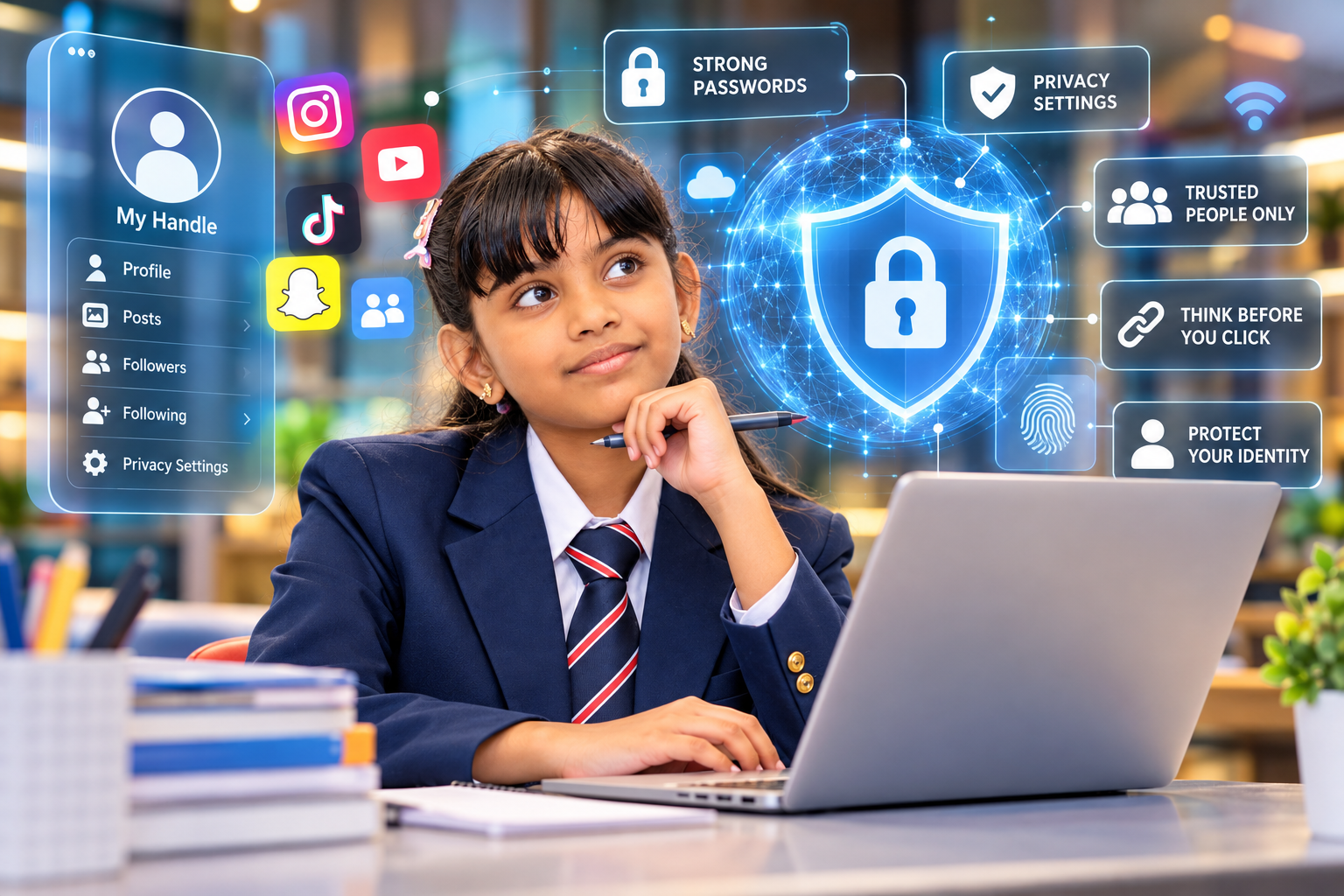
Is my password strong and unique?
Do I use the same password everywhere? Do I know who can see what I post?
Have I checked the privacy settings of my accounts recently?
Do I really know the people following me?
Before clicking a link, do I know where it will take me?
For teenagers, online safety is not only about protecting an account from being hacked. It is also about protecting identity, reputation, relationships and personal information.
Sometimes the biggest risk is not a complicated cyberattack. It is a moment of carelessness: sharing an OTP, forwarding a private photograph, accepting a request from someone we do not know, revealing our location, or posting something in anger that we later wish we had not shared.
There is also the pressure to keep up. Social media can make us feel that everyone else is travelling, succeeding, having fun or living a better life. Remember that what we see online is usually a selected version of someone's life, not the whole story.
Being digitally safe therefore requires more than technical knowledge. It requires judgement.
We should know how to protect our accounts, but also when to question information. We should know how to report harmful content, but also understand when our own posts might harm someone else. We should know how to use technology confidently without allowing it to make every decision for us.
Our online presence is becoming part of our identity long before we enter university or the workplace.
So perhaps the better question is not simply, "How safe is my password?"
It is:
"How carefully am I building the digital identity that represents me?"
Because our handles may be digital, but the person behind them is very real.


-768x768.webp)